
Interview with Benjamin French, Associate Director, VIVE Sustainable Supply Programme and Robyn Cooper, Senior Manager, VIVE – Regenerative Agriculture
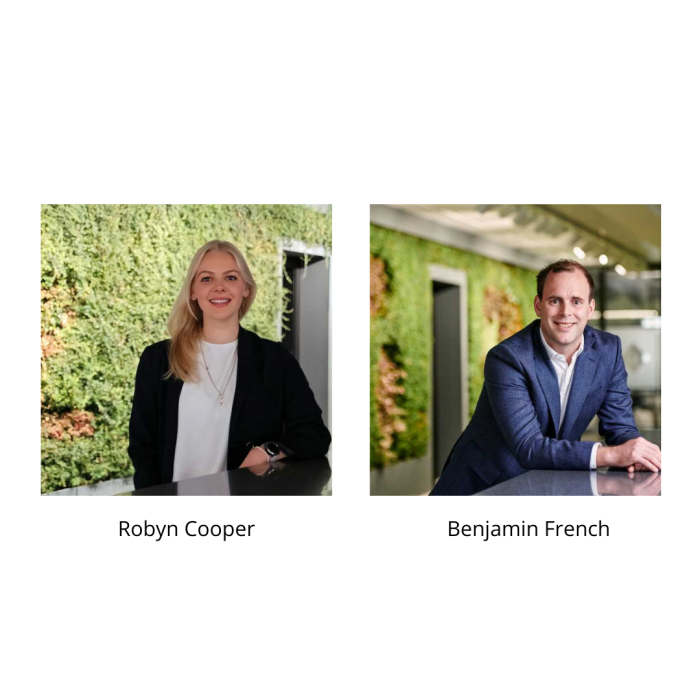
Robyn Cooper: I joined the VIVE team earlier this year, because it offered a unique opportunity to connect pressing sustainability needs with the commercial realities of agricultural supply chains. VIVE bridges responsible sourcing, regenerative outcomes, and carbon transparency, in a way that makes sense for farmers, buyers, and investors. I was hooked by the potential to leverage the VIVE and CZ model, which extends beyond the farm, through to innovative trade and finance solutions, shaping novel interventions that bridge siloes, for a more resilient food system. I sat down with Benjamin French to reflect on what has been a major year for VIVE, and what is ahead.
Benjamin, you have been involved since the early days of VIVE and led the Programme through a pivotal year. What are your biggest highlights from the past 12 months?
Benjamin: It has been a transformative year. A few moments stand out.
First, the scale and pace of growth. We have seen major new participants join, from Mitr Phol (Asia’s largest sugar producer based in Thailand) and MSF Sugar in Australia to Grupo PIASA in Mexico. These additions demonstrate the appetite for robust, commercially viable sustainability pathways across different global markets.
Secondly, VIVE Climate Action has gone from concept to generating meaningful global data and insight. What started as a carbon-measurement tool is now a fully embedded GHG transparency and decarbonisation service used by mills, refineries, traders, and importantly by buyers who increasingly need verified Scope 3 data.
Third, we have laid the groundwork on regenerative agriculture. Our first multi-year projects across Asia have delivered tangible learnings, and we have now formally added Regenerative Agriculture as a VIVE service, with the VIVE Regen Ag module launching in January 2026.
And lastly, the team. We have grown a highly capable, enthusiastic team, deepening our expertise and strengthening our collaboration with local experts in key regions, so we can move faster from pilot to scale.
Robyn: This year marked a milestone achievement of reaching 100+ Buyers Supporting VIVE. What value does VIVE bring to buyers, especially with increasing pressure on carbon emissions and sustainable sourcing?
Benjamin: F&B companies today face two big challenges: credible supply-chain data and real pathways to sustainable sourcing. VIVE addresses both.
The Buyers Supporting VIVE (BSV) is a network of buyers who support sustainable improvements within global supply chains, and includes organisations such as Nestlé, The Coca Cola Company, FrieslandCampina, Heineken, Carlsberg, and many more – all keen to drive the right market signals for producers to engage on sustainability. Their reasons for joining are remarkably consistent.
- Traceability and assurance. VIVE provides third-party-verified traceability from farms through to end buyer. That gives buyers the confidence to make and report sustainable sourcing claims.
- Carbon transparency. With VIVE Climate Action, buyers can access consistent, comparable, and verified Scope 3 emissions data aligned to their sustainability strategies.
- Supply-chain stability. Buyers can prioritise suppliers who demonstrate continuous improvement and lower sustainability risk — crucial for long-term relationships.
- Commercial differentiation. VIVE-verified commodities command growing demand. Buyers want access to sustainable volumes, and VIVE helps build that pipeline.
Ultimately, VIVE turns sustainability into a commercial benefit, not just a compliance exercise, and the action from our BSVs has reinforced this message consistently.
Robyn: VIVE has also expanded into new sectors, namely textiles and financial services. Why is this significant, and what role is VIVE playing?
Benjamin: This is one of the most exciting developments. We’ve found huge alignment in needs across different sectors, and by aligning on common frameworks, we help to remove audit duplication and confusion for all involved.
For example, the global shift toward bio-based materials in the textile industry is accelerating fast. Through our collaboration with Hyosung TNC, VIVE now provides deep traceability from sugarcane feedstock to finished bio-spandex fibre — a world first.
Our verification framework enables the textiles sector to ensure:
- Feedstocks are traceable back to verified sustainable agricultural production.
- Supply chains are transparent, deforestation-free, and responsibly managed.
- Brands can validate their claims for consumers with confidence.
This matters because brands are under pressure to prove their sustainability commitments. VIVE helps them close the gap between agricultural feedstock and finished textile product.
Equally, as we expand VIVE Investor services, we see huge potential for the programme to be used by financial institutions and impact investors seeking visibility and assurance of supply chain sustainability. Our approach unlocks commercial value by bridging the gap between investor expectations, agricultural realities, and market requirements.
Robyn: VIVE has been expanding geographically too. What have been the most meaningful developments in 2025?
Benjamin: VIVE is designed to build sustainable supply chains, and therefore expansion is strategically linked to buyer demand across the globe. A few standouts include growth across Thailand, Mexico, Australia, and Japan.
In Thailand, we’ve had a surge of activity with 3 key Mitr Phol mills joining the programme and by expanding our activity footprint into cassava. Meanwhile, Mexico has seen Grupo Piasa joining as the first Mexican mill to join VIVE. In Australia, MSF Sugar joined and we aligned VIVE with the Smartcane BMP national standard. Lastly, in Japan we’re collaborating with Itochu to scale VIVE within Japanese ingredient supply chains.
This geographical spread shows that VIVE is now a genuinely global framework applicable across cultures, climates, and regulatory environments.
Robyn: And finally, what can participants and buyers expect from VIVE in the year ahead?
Benjamin: 2026 will be about deepening insight and scaling impact.
- We are expanding VIVE Climate Action to cover more regions and grow the quality of practical insights at farm and factory, to inform meaningful decarbonisation action.
- We’ll launch the VIVE Regen Ag module, with a focus on implementation across our key participants, from Brazil to Thailand, with more pilots converting into full multi-year programmes.
- We are scaling our new VIVE Investor Services offering, enabling investors to apply VIVE’s tools, data, and assurance for diligence, ESG tracking, and value-creation planning.
Our mission remains the same: to make sustainable supply chains commercially viable, transparent, and scalable. The momentum we’ve built this year gives me huge excitement for what’s ahead.
Robyn: Thanks, Ben. For me VIVE is not just responding to change but helping to define what sustainable & regenerative supply chains look like across agri commodities supply. I am looking forward to seeing how we turn this momentum into measurable outcomes in 2026 and beyond!”